
Executive summary
CONTEXT
- The United Kingdom (UK) is faced with a new nuclear age, which raises questions as to the continued suitability of its nuclear posture. The ‘minimal, credible’ deterrent of a single nuclear-powered ballistic missile submarine (SSBN) on patrol, providing a Continuous At-Sea Deterrent (CASD), was designed for the post-Cold War order of the 1990s and 2000s. This world no longer exists.
- Compared to previous decades, a series of factors are combining to raise questions about the future credibility of the UK’s current nuclear posture, including:
- The United States’ (US) reprioritisation of its military posture to the Western Hemisphere and the Indo-Pacific, including a likely drawdown of forces in Europe;
- Russia’s emboldened aggression – including greater risk tolerance – and renewed Russian interest in novel nuclear delivery systems; and
- The rise of the People’s Republic of China (PRC) as a significant military power, which is investing heavily in its nuclear forces to modernise and expand its arsenal.
- Britain has to consider circumstances in which it may be faced by rapid escalation in Europe, with the potential for a multi-front crisis. It has to ensure that adversaries do not come to believe they possess significant leeway to conduct direct acts of aggression against the UK and its allies – even including limited nuclear use – while staying below the threshold for a British strategic nuclear response.
QUESTIONS THIS REPORT ADDRESSES
- How have the nuclear postures of adversaries evolved?
- How did extended deterrence in the North Atlantic Treaty Organisation (NATO) evolve, and to what extent will the current posture remain suitable?
- Have recent attempts by the UK and France to bolster their nuclear postures gone far enough?
- What further steps can His Majesty’s (HM) Government take to strengthen Britain’s nuclear posture?
KEY FINDINGS
- Of the ‘CRINK’ countries – the PRC, Russia, Iran, and North Korea – three are nuclear powers, and Iran, despite American and Israeli air strikes, still appears to have the vestiges of a nuclear programme underway. Of this grouping, Russia is the most acute threat to the UK; it retains an extensive sub-strategic nuclear arsenal.
- Fears of the US abandoning security commitments to NATO are exaggerated. The rhetoric of American leadership aside, Washington has said and done nothing to indicate that it will revoke extended nuclear deterrence in the Euro-Atlantic. However, as a reduced US military presence in Europe could coincide with a multi-front crisis, the risk of Russia testing the credibility of this extended deterrence has increased.
- European NATO has neither the time, nor the spread and depth, of nuclear weapons expertise and capacity to debate and implement a radically different ‘European nuclear umbrella’. It would be unwise to rehash historical debates about other formats. The current format, including sub-strategic nuclear weapons sharing arrangements, is adequate. However, there should be a greater European effort to take the lead more within this framework.
- European NATO allies are aware of the growing nuclear deterrence gap, and have been in close consultation with Britain and France. To their credit, by committing to joining NATO’s Dual-Capable Aircraft (DCA) effort and exploring the concept of ‘forward deterrence’ (as well as enhancing their own bilateral cooperation) respectively, London and Paris have made steps to assuage them, but these efforts do not currently go far enough.
- The UK is missing a ‘rung’ on the ‘escalatory ladder’, as it does not possess a dedicated and sovereign sub-strategic nuclear weapon. Alternatives such as Trident in a sub-strategic role or conventional deep precision strike weapons cannot act as substitutes for the deterrent role of a dedicated sub-strategic nuclear weapon. While efforts to bolster Britain’s nuclear posture should be balanced with the dire needs for investment in conventional forces and the limits of the capacity of the Atomic Weapons Establishment (AWE), a sovereign sub-strategic nuclear weapon is needed.
RECOMMENDATIONS
In order to boost the UK’s nuclear posture, HM Government should:
- Deepen British-French nuclear coordination: The UK and France have made great strides in deepening their nuclear relationship. Next steps should aim to support Britain’s efforts to rebuild institutional muscle memory, and complicate Russian decision-making. This should include more direct participation in the French nuclear ‘Poker exercises’, potentially including one conducted outside of France.
- Update public-facing nuclear doctrine: Public-facing UK nuclear doctrine has remained mostly unchanged over the last three decades. A refresh of the wording will complicate Russian decision-making.
- Refresh defence nuclear education: Nuclear education across the British defence landscape is too siloed. Further efforts to spread nuclear knowledge across stakeholders would be useful.
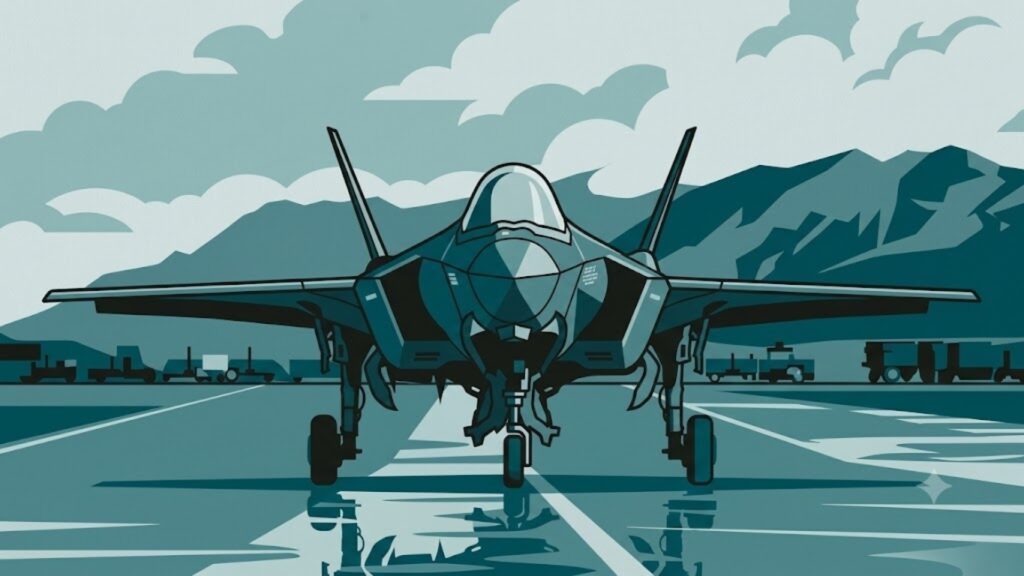
- Embrace DCA participation: A single double-hatted squadron is not an ideal contribution to nuclear sharing. A further two squadrons of F-35A Lightning II Joint Combat Aircraft should be procured, and faster. In addition to the benefits of a second nuclear power joining the DCA effort, embracing participation will help to rebuild institutional muscle memory should the UK decide to acquire sovereign sub-strategic nuclear weapons.
- Develop a sovereign sub-strategic nuclear capability: Britain should develop its own air-launched sub-strategic nuclear weapon to help share the burden of the DCA effort and hedge against the risk that the Kremlin would calculate that Washington and/or Paris would hold back in extremis if facing Russian nuclear escalation. While there are a number of fiscal and timescale challenges, many of these could (and should) be mitigated. Avoiding gold-plated requirements and seeking imaginative cost-sharing mechanisms with allies could help to manage the burden.
- Rekindle national nuclear consciousness: Greater efforts by HM Government to increase public awareness of the importance and cost-effectiveness of nuclear weapons for deterrence purposes should be pursued.
Foreword
The world is changing fast. A vital element of our defence posture is our ownership of nuclear weapons. They bring a critical element to our deterrence posture: credibility.
The question posed in this important Report from the Council on Geostrategy is to make the case for a significant adjustment to our nuclear posture. Crucially, it offers options on how to deliver that change.
I welcome this contribution to the nuclear debate. I have long held the view nationally and within the North Atlantic Treaty Organisation (NATO) that in the right setting, we do not discuss nuclear issues in sufficient depth and with sufficient rigour.
With the world in turmoil, the discussion, the options, and the need to build the credibility of nuclear deterrence is urgent and important.
Air Chf. Mshl. The Lord Peach KG GBE KCB DL
Chief of the Defence Staff (2016-2018)
Chair of the NATO Military Committee (2018-2021)
Introduction
The Americans were equally convinced that they could no longer accept an unlimited liability for the nuclear defence of Europe…So the stage was set for a period of transatlantic bargaining, in which Washington would implicitly threaten to remove its nuclear umbrella, perhaps by withdrawing some of its troops so as to reduce its stake in Europe’s security, while Europe would increase its conventional contribution to the alliance, so as to raise the nuclear threshold and thus reduce America’s nuclear liability.[1]
Although taken from a passage of a memoir written in the 1980s reflecting on the 1960s, the above extract could be read as a quote from John Healey, the United Kingdom’s (UK) current Secretary of State for Defence. It reflects that worries over the American nuclear umbrella have been a continuing concern for British decision-makers. The UK is once again facing a similar period of uncertainty, including renewed bargaining in its relationship with the United States (US). Across Europe, there are louder calls for a reappraisal of the nuclear postures that safeguard the free and open countries on the continent. Not only have these proposals come from strategists and commentators; national leaders have begun to ask questions, including Friedrich Merz, Chancellor of Germany.[2] Some, such as Donald Tusk, Prime Minister of Poland, have even gone so far as to suggest their countries may look to acquire their own nuclear weapons if the geopolitical situation continues to worsen.[3]
Although the situation today bears similarities to the midpoint of the Cold War, over 60 years later there are a number of differences. For a start, Europe is no longer the primary theatre of concern for the US; it now plays third or fourth fiddle to hemispheric defence, the Indo-Pacific, and possibly even the Middle East. The threat picture has also evolved. Russian aggression has heightened, and though not the hegemonic power of the Soviet Union, it remains a serious threat given its risk tolerance, war resilience, and vast nuclear arsenal. Alongside this, the People’s Republic of China (PRC) is now the most powerful economic opponent to the free and open international order, and possesses a nuclear force that is growing at a rapid pace. The fourth significant difference is the extent to which Britain scaled back its nuclear posture in the aftermath of the Cold War, both in terms of scale and delivery options.
With these factors, it is increasingly imperative that His Majesty’s (HM) Government review and rebuild the UK’s nuclear position. Given the artificialities involved, recent public simulations of nuclear crises have to be treated with caution. Yet, they do suggest that in certain scenarios, the instinct of British decision-makers would be to back down when faced with overt acts of aggression.[4] The jump to a strategic nuclear response was seen as disproportionate or simply far too risky – usually both.
Although the possibility of a rapid escalation to strategic nuclear use will factor into the decision-making of adversaries, they may also come to believe that there is significant leeway for them to conduct direct acts of aggression against the UK and its allies – even including limited nuclear use – while staying below the threshold that would result in a British strategic nuclear response. A more flexible array of options, alongside a refreshed nuclear culture, is needed to ensure that the UK’s posture continues to succeed in deterring the most severe acts of aggression in a changing and uncertain world.
HM Government has recognised this challenge. The Strategic Defence Review (SDR) and National Security Strategy (NSS), both published in June 2025, accept that Britain faces a new nuclear age. For example, the SDR states that ‘the UK must explore how to support the US and its NATO [North Atlantic Treaty Organisation] allies in strengthening extended deterrence across the Euro-Atlantic’,[5] while the NSS states that ‘We are entering a period in which we are likely to face indirect and potentially direct confrontation with adversaries’, ‘including the increasing salience of nuclear weapons’, ‘with major implications for how and where we invest our resources’.[6]
Some positive concrete steps have also been taken. The Nuclear Deterrence Fund was established in 2024 to invest in rebooting the intellectual side of Britain’s nuclear posture, and the Royal Air Force (RAF) will join NATO’s Dual-Capable Aircraft (DCA) mission – both European and American aircraft carrying American sub-strategic nuclear bombs – with the announcement that 12 nuclear-certified F-35A Lightning II Joint Combat Aircraft will be procured. The steps required to operationalise DCA participation, such as governance and certification, will help in the case of future sub-strategic efforts – whether shared or sovereign. However, the question still remains: is this enough?
1.1 Aim and structure
This Report seeks to build on these initial steps. It considers how else the UK can rebuild its nuclear posture by addressing the following questions:
- How have the nuclear postures of adversaries evolved?
- How did extended deterrence in NATO evolve, and to what extent will the current posture, heavily reliant on the US, remain suitable?
- Have recent attempts by Britain and France to bolster their nuclear postures gone far enough?
- What further steps can HM Government take to strengthen the UK’s nuclear posture?
In light of the answers to these questions, this study will make the case for the regeneration of a sovereign and dedicated British sub-strategic nuclear weapons system. Such an approach would be the single most significant means by which HM Government could bolster its escalation options and strengthen collective NATO deterrence.
2.0 A new nuclear age
During the immediate post-Cold War era, the strategic and sub-strategic postures of the established nuclear powers were reduced. Rather than the risk of great power nuclear arms races or nuclear wars, the main threat was seen to be from ‘loose nukes’: the risk of nuclear weapons falling into the hands of rogue states or non-state actors.[7] Although the threat of a ‘loose nukes’ scenario remains, the last ten years have seen a concerted effort by certain revisionist countries – the so-called ‘CRINK’, comprising the People’s Republic of China (PRC), Russia, Iran, and North Korea – to develop or expand their nuclear arsenals. This has seen some horizontal proliferation as more states seek to acquire nuclear weapons, and significant vertical proliferation as existing nuclear powers grow their stockpiles of warheads and develop new or improved means of delivering said warheads to their targets.
As geopolitical competition has intensified, adversaries and allies alike have started to evaluate and develop their nuclear postures in different ways. These changes will pose related but differing demands on the UK’s own nuclear posture if it does not want the deterrent effect of its nuclear arsenal to weaken. The most acute challenge comes from Russia, but there are interrelated challenges from the PRC, Iran, and North Korea.
2.1 Russia’s nuclear capabilities
Russia inherited an enormous, extensive, and – at the time – modern nuclear arsenal following the disintegration of the Soviet Union. Difficult economic circumstances in the 1990s and 2000s held back nuclear modernisation to an extent, but nuclear forces have long been a priority for the Kremlin. Since around 2010, the scale of modernisation has greatly increased.
The Russian Navy is in the process of commissioning a new fleet of nuclear-powered ballistic missile submarines (SSBNs) – the Borei class, of which eight are already in service, and a further four are planned. The Borei class carries a new submarine-launched ballistic missile (SLBM): the RSM-56 Bulava. A single Borei class SSBN can carry 16 Bulavas, each with six 150 kiloton warheads (approximately ten times more potent than the American atomic bomb dropped on Hiroshima).[8]
In addition to its strategic submarine forces, Russia has also modernised its land-based strategic nuclear forces. These are a mix of both silo and mobile launchers. After initial testing challenges, the new Sarmat Intercontinental Ballistic Missile (ICBM) is now in active service. A decade ago, half of Russia’s ICBMs were of Soviet vintage; today, the figure is less than 10%.[9]
The Kremlin has also experimented with new nuclear-armed systems. Their intended purpose remains to be seen, but they are probably intended to hedge against developments in NATO’s ballistic missile defences (especially those of the US). These new systems include the Avangard nuclear-capable Hypersonic Glide Vehicle (HGV), the Poseidon nuclear-powered and armed torpedo, new intermediate range missiles such as the RS-26 Rubezh, and the nuclear-powered and armed 9M730 Burevestnik cruise missile.
However, all of the above systems are designed for strategic attacks (although Poseidon may have a sub-strategic use against concentrated naval forces). Their use is guarded against by Britain’s own strategic nuclear arsenal, although the UK’s total potential nuclear yield is far below that of Russia’s. If fully loaded, a Vanguard class SSBN with 16 Trident II missiles carrying 12 Holbrook warheads each could unleash 19.2 megatons of explosive power.[10] This is well below Russia’s total explosive power of over 170 megatons from its own ICBM and SLBM forces, but still enough to inflict ‘unacceptable damage’ on the Russian state.[11]
Of far greater concern is Russia’s extensive arsenal of sub-strategic nuclear weapons, as it possesses almost 1,500 warheads.[12] Given that most other countries that retain sub-strategic nuclear weapons maintain very small numbers for signalling purposes, the only conclusion that can be drawn is that the Kremlin maintains and updates these warheads – at great expense – as a means to counterbalance the conventional forces of potential adversaries. In other words, Russia still sees a role for battlefield use of nuclear weapons to destroy military forces and signal its intent to escalate. Many of these weapons are dual-use and capable of being launched by air, sea, and land.
Russian nuclear doctrine has also changed following an update to public policy in November 2024.[13] The update broadened the number of scenarios under which the Kremlin claims it might employ its nuclear arsenal, and lowered the threshold for doing so, although the extent to which this reflects published doctrine catching up with actual doctrine is unclear. It also represented a clear attempt to reinforce the fear of Russian nuclear coercion, which has weakened over time. NATO and Ukraine have crossed several previous Russian ‘red lines’, despite regular reminders from the Kremlin – either through speeches or nuclear exercises – of Russia’s nuclear power. Regardless of the reasoning, what is more important is the fact that the capability exists, and therefore the ability to use it in extremis remains a possibility.
One final, and often overlooked, point on Russia’s nuclear posture is the geostrategic disposition of its nuclear arsenal and what this means for Britain. Much of the Kremlin’s nuclear forces are based in the High North, where over half of its non-strategic nuclear warheads are in use with its naval forces. That Russia enjoys a nuclear asymmetry in a sparsely populated region – and one of utmost strategic importance – should be of more concern than it is; especially so as the UK prepares to refocus its efforts more directly into the High North through the new approaches of Atlantic Bastion, Strike, and Shield.[14]
2.2 A nuclear CRINK?
Russia may be the primary nuclear concern for Britain, but it is not the only one. The other members of the CRINK – the PRC, Iran, and North Korea – have all developed (or have attempted to develop) their nuclear postures in recent years. Moreover, all see the UK as a potential or existing rival in one way or another.
The PRC became a nuclear power in 1964, and for decades maintained an objectively minimal nuclear deterrent. However, Beijing has spent a great deal of time and effort in the last decade to expand and modernise its nuclear arsenal. Over the last five years, the PRC’s nuclear arsenal has tripled to approximately 600 warheads; a growth rate unprecedented since the early stages of the Cold War.[15]
Historically, as part of its previous minimalist approach, the PRC maintained limited means of delivery. Now, however, it operates an increasingly capable nuclear triad. Beijing is in the process of introducing an improved Type 094A class SSBN into service. Each Type 094 class carries 12 SLBMs, but are being rearmed with the new JL-3 missile, debuted at the 2025 Victory Day Parade.
An additional new development is the introduction of an air-launched element to the Chinese nuclear arsenal. It is estimated by military intelligence services that the H-6N bomber (a nuclear variant of the H-6 bomber) entered service with an aeroballistic missile in 2019, and that there are now roughly 20 in service.[16] These will be replaced in the near future by a stealth bomber: the H-20.
Although the UK’s policymakers may think that the evolutions in the PRC’s nuclear posture are far away and of less concern than the more acute Russian threat, they still pose significant and unprecedented challenges – not least in the context of the deepening strategic partnership between Beijing and Moscow. Britain has never before faced the prospect of two peer nuclear adversaries; a number of the PRC’s SLBMs and ICBMs are capable of reaching the British Isles.
The UK’s current ‘minimal, credible’ nuclear posture is a single SSBN on patrol; given the limits of this approach, it may prove challenging to deter two nuclear adversaries simultaneously in the event of a crisis where both were supporting one another. Dividing the firepower of Trident between two widely dispersed target sets could make it challenging to render ‘unacceptable damage’ to both. In addition, the firing of SLBMs at one adversary may reveal the location of the British SSBN to the other, rendering it vulnerable to detection and destruction.
In addition to Russia and the PRC, North Korea and Iran represent two other – albeit less powerful – adversaries. North Korea is already a nuclear power, and Iran is known to have been keen on generating its own nuclear capabilities.
Pyongyang pursued nuclear weapons for regime survival and, primarily as a result of limited resources and the efforts required to bypass sanctions, maintained limited means to deliver its warheads. In recent years, North Korea has accelerated efforts at improving and diversifying its arsenal. This began in 2021 with announcements of a Five Year Defence Plan to ‘field a new nuclear-capable submarine, develop tactical nuclear weapons, deploy multiple warheads on a single missile, and improve the accuracy of ICBMs’.[17] These efforts were bolstered by deeper ties with Russia following the beginning of its full-scale invasion of Ukraine, for which Pyongyang has provided manpower and ammunition in exchange for Russian technical support and missile technology.
Tehran’s efforts to develop nuclear technology began in the 1980s but have been stymied by sanctions, espionage, and military strikes. Iran experts hold mixed views on whether the country wants to develop nuclear weapons, but it has become increasingly clear that this is the regime’s objective.[18] In Operation MIDNIGHT HAMMER in June 2025, the US struck several Iranian nuclear production sites. The damage to these facilities undoubtedly set Iran’s nuclear programme back to some degree. Additionally, the impact of the further American-Israeli strikes since 28th February 2026 remains to be seen.
In short, the post-Cold War promise of nuclear disarmament – an era once defined by smaller stockpiles, limited delivery systems, and greater global transparency – is definitively over. Today, the UK lives in a sobering new reality; facing at least two adversarial states equipped with large, rapidly modernising nuclear arsenals. While the nuclear capabilities of North Korea and a potentially nuclear-armed Iran might feel like distant concerns for Britain, they are intimately tied to the nation’s immediate security. These countries have already moved to support Russia’s efforts to destabilise NATO’s eastern flank; Ukraine, for example, has been resisting not just Russian aggression, but the combined financial, industrial, and human resources of the entire CRINK. With the very real possibility that this entire grouping could eventually be nuclear-armed, and with the US continually adapting its global strategic posture in response, nuclear deterrence within Europe is coming under increasing strain.
3.0 America’s evolving nuclear posture
Strategic anxiety is rising in Europe, given the onset of intensified geopolitical competition and a new nuclear age. Debates across NATO today are once more centred on the credibility of extended US nuclear deterrence, which has buttressed the free and open order in Europe since the end of the Second World War. In outlining Washington’s new objectives, the recent US National Security Strategy (NSS) and National Defence Strategy (NDS) ruffled many European feathers. The crux of the issue is not that America is abandoning its commitments or becoming inherently unreliable; rather, it is that the US expects the UK and other European powers to do much more to uphold Euro-Atlantic security so that American forces can focus on other regions where the threat continues to grow.
While both the US NSS and NDS have little to say about American nuclear posture in Europe, it is possible to read between the lines. The NDS states that Washington’s ‘NATO allies are…strongly positioned to take primary responsibility for Europe’s conventional defence, with critical but more limited US support.’[19] The decision not to include nuclear explicitly within the areas where European allies should take responsibility suggests that Washington currently intends to uphold its nuclear commitments to NATO. Given that the US is by far the premier nuclear power within the alliance, this is welcome, but not without challenge.
3.1 The American arsenal
The US possesses the world’s second largest stockpile of nuclear warheads, numbering almost 4,000. These include both strategic and non-strategic warheads deployed across a modern and capable nuclear triad.[20] The strategic arsenal includes 450 land-based silos, which can hold Minutemen III ICBMs – while a Minuteman III can hold up to three warheads, since 2005 they have only carried a single warhead due to treaty obligations.[21] Alongside this is a fleet of 14 Ohio class SSBNs, each able to launch up to 20 Trident II SLBMs (with up to 12 warheads each), although usually only three or four are on patrol.
These strategic weapons are complemented by an air-launched sub-strategic capability split between the B61 free-fall bomb carried by combat aircraft and the AGM-86 cruise missile launched from strategic bombers (the B-52 Stratofortress and B-2 Spirit). Having reduced it in the aftermath of the Cold War, the US is in the process of modernising its sub-strategic nuclear arsenal. In the near future, America will possess two types of air-launched sub-strategic nuclear weapons and one submarine-launched:
- B61: This is a free-fall bomb. The US has recently consolidated the B61 from multiple variants into two: the B61-12 and the B61-13 for deep penetration. America has around 230 B61s, with approximately 100 deployed across Europe.[22] The B61-12 has four yield options of 0.3-50 kilotons, and can be carried by a number of aircraft including the F-35A Lightning II.
- AGM-181 Long-Range Stand-Off Weapon (LRSO): This is a new air-launched cruise missile in development that is expected to enter service in the early 2030s. The US plans to procure over 1,000 such missiles.[23] The AGM-181 will be integrated with the B-52 Stratofortress and the new B-21 Raider bombers.
- Nuclear-armed Sea-Launched Cruise Missile (SLCM-N): The US Navy retired its nuclear-tipped Tomahawk cruise missiles in 2013, but has since decided to reacquire the capability. The missile will carry a modified version of the W80-4 warhead being developed for the AGM-181. The SLCM-N would be submarine-launched, and possibly surface-launched. It is expected to enter service in the early 2030s.
3.2 The future of the US nuclear posture
American nuclear firepower, both overwhelming and flexible, has long provided the definitive edge in NATO’s capability to deter Russia. Washington’s political assurance regarding its nuclear umbrella over Europe remains steadfast; while successive US administrations have applied ever more pressure on Europeans to rearm, they have never questioned the nuclear guarantees. Similarly, British-American collaboration on future strategic warheads continues via the Astraea and W93 respectively, as well as the new aeroshell for Trident missiles. The uncertainty lies in the perceived credibility of this commitment during a multi-front crisis involving the PRC in the Indo-Pacific. Russia may use such a crisis to attempt further revisions to the Euro-Atlantic security order, using its nuclear heft to divide and cower European nations.
The reasons for this are twofold. The first challenge is the credibility of extended deterrence without the large-scale presence of American conventional forces in Europe. There are currently around 100,000 US military personnel present across the continent. If tempted to attack NATO, the Russian calculus would need to take into account that the American president would find it very challenging not to be drawn into any fighting, and it would be even more challenging for the Kremlin to avoid killing US personnel. This entanglement is a core pillar of credible extended deterrence. A significantly reduced American posture in Europe would alter this understanding, but the US has nevertheless made clear its intent to reduce the number of American troops on the continent and to encourage its European allies to shoulder far more of the conventional burden.
The second challenge is that of Chinese aggression in the Indo-Pacific and beyond. The US NSS and NDS re-emphasise that Europe is a theatre of third or fourth priority for Washington, behind the Western Hemisphere, the Indo-Pacific, and potentially also the Middle East. In some respects, this position goes back to at least the early 2010s with Barack Obama’s ‘pivot to Asia’, but the rebalancing of America’s global posture is accelerating. In the event of a multi-front crisis where the CRINK applies simultaneous direct pressure on free and open countries in both the Euro-Atlantic and the Indo-Pacific, the US would likely focus on the PRC.
In essence, while America may remain officially committed to NATO’s extended nuclear deterrence, the UK and the major European powers would do well to prepare for a scenario where the US is unable to fulfil this role. This could stem from a significantly reduced conventional presence in Europe as American strategic focus shifts elsewhere.
3.3 The distraction of a European nuclear umbrella
Given that the nuclear deterrence of Russia and NATO’s nuclear sharing arrangements rely almost entirely on the US, some Europeans have begun to ask whether a case now exists for a genuinely European nuclear umbrella. This would not be the first time that such questions have been asked. However, all previous attempts to establish a European deterrent ended in failure.
Indeed, it was to assuage European fears that NATO has for a long time described itself as a ‘nuclear alliance’, as opposed to an alliance with some nuclear powers. There have been references to nuclear weapons in NATO’s key strategic documents from its outset.[24] The first NATO Strategic Concept (DC 6/1) of 1949 highlighted the ‘ability to carry out strategic bombing promptly by all means possible with all types of weapons without exception’.[25] The US subsequently committed nuclear weapons to NATO in July 1953, with the first American sub-strategic nuclear weapons deployed to Europe in September 1954. NATO’s next Strategic Concept (MC 14/2) of 1957 stated:
Our chief objective is to prevent war by creating an effective deterrent to aggression. The principal elements of the deterrent are adequate nuclear and other ready forces and the manifest determination to retaliate against any aggressor with all the forces at our disposal, including nuclear weapons.[26]
Later that year, NATO decided at the Paris Summit to establish stocks of (US-owned) nuclear warheads that could be delivered by other member states. These included nuclear artillery systems, surface-to-surface rockets, medium-range ballistic missiles, and air-delivered gravity bombs.
These steps eased but did not resolve anxieties, and the alliance continued to debate complex multilateral alternatives to this US-centric system to advance a more broadly based European nuclear deterrent force. Perhaps the most developed was the Multilateral Force (MLF). Its original stimulus under the Eisenhower administration was the hundreds of medium-range Soviet missiles and aircraft facing Western Europe. The proposal that eventually emerged was for a fleet of 25 surface vessels, each carrying eight Polaris missiles and having a crew taken from at least three of the participating nations, all of whom would finance the force. However, few European allies – not least Britain and France – were keen on this idea. It was cumbersome, and would not resolve the basic problem of control over nuclear weapons, which were to be produced by the US.
In December 1964, the UK made a new proposal for an Atlantic Nuclear Force (ANF). This involved most of the existing and planned British nuclear force, an equal amount of US forces, and a separate multilateral component. The system would be under international command, but with national vetoes. This had a similarly lukewarm reception: talks continued during 1965 until the matter dropped. In the words of Denis Healey, then Secretary of State for Defence, ‘experience with the MLF should have taught both the European and American governments a lesson of seminal importance – there can be no hardware solution to the quintessentially political problem of nuclear sharing’.[27]
3.4 The merits of the DCA format
What emerged from these debates were the arrangements for the delivery of US sub-strategic nuclear weapons by a number of European air forces (as well as the US Air Force itself) – essentially the DCA arrangements that continue today. The participating air forces have been relatively discreet about their involvement, but there are traces in the public domain. NATO notes that America ‘has deployed a limited number of B-61 nuclear weapons to certain locations in Europe, which remain under US custody and control in full compliance with the Treaty on the Non-Proliferation of Nuclear Weapons (NPT).’[28] It also notes that:
…a number of NATO countries contribute a Dual-Capable Aircraft (DCA) capability to the alliance. These aircraft are central to NATO’s nuclear deterrence mission and are available for nuclear roles at various levels of readiness. In their nuclear role, the aircraft are equipped to carry nuclear weapons in a conflict, and personnel are trained accordingly. The United States maintains absolute control and custody of its nuclear weapons forward-deployed in Europe, while allies provide military support for the DCA mission with conventional forces and capabilities.[29]
There is no publicly available detail on the operational concept, other than the comment that ‘operationally, nuclear sharing provides military and political tools for deterrence and can be used to manage escalation in a crisis.’[30] It would be reasonable to assume that the DCA mission gives NATO’s Supreme Allied Commander Europe (SACEUR) nuclear options in the sub-strategic range to deter Russia from considering the use of theatre nuclear weapons in a regional conflict with the alliance.
Publicly available doctrine from the 1980s may offer some clues as to how this might work in practice. During the late Cold War, NATO’s first step would have been ‘selective use’: the launch of a small number of warheads to demonstrate resolve. If this failed, or if the Soviets had launched a massive nuclear escalation, the next stage was the ‘Coordinated Launch Sequence Plan’: a mass launch of sub-strategic nuclear weapons.[31] Targets included missile sites, rail facilities, bridges, runways and railway lines, airfields, bomb stores, supply dumps, and armoured fighting vehicle concentrations, as well as select hardened targets.[32] Essentially, these weapons existed to deter war by their known destructive power and, failing that, to deter nuclear use by an adversary and unleash potential devastation upon the conventional military forces of said adversary.
A nuclear mission can only be undertaken after explicit political approval is given by NATO’s Nuclear Planning Group (NPG), which can only be given if authorisation is received from the American president and British prime minister. The fact that the NPG includes all NATO allies except France and provides them a say on nuclear doctrine and use, alongside the format of forward deployment of these weapons, serves to entangle US nuclear deterrence further into the fabric of the alliance.
As well as the modernisation of the B61 bombs to the B61-12 standard, the capability of the platforms is also being significantly enhanced. The Netherlands has already replaced the F-16 Fighting Falcon with the F-35A Lightning II, and Belgium will follow suit shortly.[33] Italy will replace the Tornado with the F-35A Lightning II, and Germany will follow suit later this decade. In recent years, NATO has also deliberately raised the public profile of the DCA mission by publicising the annual STEADFAST NOON annual exercise.[34]
NATO’s nuclear sharing arrangements and the DCA mission have evolved over the decades. They are not perfect. Many alternatives have been mooted, some have progressed quite significantly in the planning process, but all have, for one reason or another, failed to deliver the right balance to reassure non-nuclear allies without overly exposing nuclear allies and therefore making them less credible. As the US shifts its conventional weight towards the Indo-Pacific, the most effective way to enhance deterrence in Europe is for capable European NATO allies to step up and lead within this already proven framework.
4.0 The existing nuclear posture of European countries
Although a wholesale dismantling of NATO’s nuclear posture is unwarranted, minor adjustments are equally inadequate for the current geopolitical climate. European nations operate within a threat environment characterised by adversaries who readily exploit strategic vulnerabilities. While the UK and its regional allies have initiated efforts to reinforce the nuclear umbrella, these preliminary measures would fall short of deterring nuclear brinkmanship in an impending age of multi-front crises.
4.1 British nuclear posture
The UK has a self-described ‘independent, minimum, credible nuclear deterrent’.[35] Uniquely among the five avowed nuclear powers, it has only one platform type and one delivery system – and, even after the upward adjustment announced in 2021, the smallest stockpile of warheads.[36] The current nuclear posture – one SSBN armed with up to 16 Trident II D5 ballistic missiles on continuous patrol – has existed since the late 1990s, when the UK’s residual airborne sub-strategic capability was withdrawn. Moreover, it essentially stems from decisions made in the late 1970s and early 1980s, and is due to endure until the 2060s. The seminal underpinning policy document, now substantially declassified, was the so-called Duff-Mason Report of 1978, which stated: ‘Over the next 30-40 years, our planning need not be geared to any nuclear threat beyond the Soviet Union.’[37] A more recent published policy document was the Trident Alternatives Review of 2013, but this focused on the relative operational and technical merits of alternative delivery systems, such as cruise missiles, rather than reassessing the overall strategic landscape.[38] Britain has moved beyond the planning horizon of the Duff-Mason Report, and the strategic landscape is changing apace.
The UK doubled down on its minimum nuclear posture in the two decades following the end of the Cold War. Having announced in the early-to-mid 1990s that it would withdraw without replacement its dedicated sub-strategic capability, the Strategic Defence Review of 1998 reduced the warhead stockpile for Trident. In parallel, the Ministry of Defence (MOD) reduced spending on the nuclear programme and downsized the capacity of its Atomic Weapons Establishment (AWE) – the body responsible for the development, production, and maintenance of the UK’s nuclear warheads.
While the level of investment was increased in the mid-2000s, the Nuclear Deterrent White Paper of 2006 and the Strategic Defence and Security Review of 2010 further reduced the warhead stockpile. This process was reversed in 2021 by the Integrated Review, which increased the ceiling on the stockpile to 260 warheads.[39] In broad terms, the AWE’s capacity has remained at a level sufficient to maintain and replace the existing stockpile, and it is currently developing a new warhead: the Astraea. Some £15 billion has been allocated for the period 2024-2029 for the warhead programmes.[40]
The minimal nuclear posture that Britain adopted in the 1990s was adequate for the time. It was an admirable attempt to signal a path to others that minimally credible deterrents worldwide were possible – although no other nation followed suit. In the new age of geopolitics, this posture is no longer prudent. The UK should reconsider its posture and adapt to a world where nuclear brinkmanship, as shown by Russia’s sabre-rattling over Ukraine, has returned. HM Government’s influence and authority would be strengthened greatly if Britain were to rebuild a more diverse nuclear arsenal; doubly so given the UK’s interests as a nuclear custodian of NATO and the US’ desire for European allies to do more to uphold the security of the Euro-Atlantic area.
One major decision has already been made. The procurement of at least 12 F-35A Lightning II Joint Combat Aircraft – which will become DCA certified – by the end of the decade will see the RAF reinstituting its nuclear role. It will also enhance Britain’s influence on the DCA policies of the alliance as a direct participant and help to reinforce the credibility of the DCA mission by the direct engagement of a second NATO nuclear power alongside America.
However, the weapons themselves belong to the US, and can be employed only with the permission of the American president. As explained, the current US administration has not called into question the continuation of American extended deterrence for Europe. It should be noted though that the risk still remains that Russia (or another potential adversary) might miscalculate the intentions of the US in an evolving crisis, especially if it is involved in managing a direct confrontation with the PRC. The only insurance against that risk – and against the risk of a future significant shift in American policy – would be for the UK to have a sovereign sub-strategic capability so it can, as at the strategic level, be an independent separate centre of decision-making. The process of operationalising British DCA participation will play a key role in rebuilding the institutional muscle memory in the UK of operating sub-strategic nuclear weapons, including storage, certification, and protocols for release.
4.2 French nuclear posture
The other nuclear-armed European NATO ally is France. Unlike Britain, France has long stayed out of NATO nuclear planning and sharing arrangements, and French nuclear doctrine remains sceptical of extended nuclear deterrence. It is evident that European Union (EU) countries do not necessarily believe that the French nuclear arsenal adequately shields them from Russian nuclear coercion. Both Sweden and Finland, despite being covered by Article 42.7 of the Treaty of the European Union (more strongly worded than NATO’s Article 5), felt so uncertain of this that they asked for explicit security assurances from the UK while they waited to join NATO.
That said, French doctrine is starting to evolve. Emmanuel Macron, President of France, laid out the concept of ‘forward deterrence’ in a speech on the future of the French nuclear deterrent on 2nd March 2026. His most significant announcement was that nuclear-capable French aircraft and their weapons could deploy beyond France.[41] However, French doctrine is deeply ingrained and unlikely to shift to the extent that it would need to in order to convince both friend and foe that Paris is serious about extended deterrence.
There is also a lack of domestic cross-political consensus about the virtues of forward deterrence. This is a significant difference from Britain and America, where all major parties agree on the virtues of extended deterrence. So, while HM Government should welcome French efforts, there may be limits on how far Paris is prepared to go.
France sees all its nuclear forces and capabilities as strategic. Unlike the UK, however, it never retired its equivalent air-launched (and, in British terms, sub-strategic) nuclear arsenal – although it did reduce its total nuclear stockpile and liquidated its land-based ballistic missiles. In addition to its own Continuous At-Sea Deterrent (CASD), the French nuclear arsenal is provided by an air-launched missile; the Air-Sol Moyenne Portée (see: Box 1).
| Box 1: The Air-Sol Moyenne Portée |
| The ASMP is a cruise missile carried by the Rafale combat aircraft. The missile carries a 300 kiloton warhead (a greater yield than that of the warheads used on the M51 SLBM carried by France’s SSBNs) and has a range of around 600 kilometres (km). Paris is in the process of introducing a modernised and extended range variant of the ASMP. France maintains approximately 50 of these missiles and warheads. By the mid-2030s, it hopes to introduce a new missile: a hypersonic cruise missile with a range of over 1,000km known as the ‘Air-Sol Nucléaire de 4ème Génération’ (ASN4G).[42] Details on the costs of the sub-strategic element of the French arsenal are difficult to establish. Between 2018 and 2025, €37 billion (£32.2 billion) was allocated to nuclear modernisation and the maintenance of France’s entire nuclear forces and infrastructure. |
The Forces Aériennes Stratégiques (FAS) – the Strategic Air Forces – are responsible for delivering these weapons. Its nuclear strike force consists of a fighter wing of two squadrons of Rafale combat aircraft and a conversion squadron. The FAS conducts the regular large-scale nuclear strike ‘Poker’ exercises, usually four times per year.[44]
The purpose of France’s air-launched nuclear weapons system is to provide a credible ‘warning shot’ that should suffice to re-establish the credibility of French deterrence in the event that it ever breaks down.[45] Forward deterrence by FAS aircraft is a welcome step, but it lacks the multilateral institutional frameworks and the permanence of current nuclear sharing practices.
4.3 Restoring the rungs: Balancing the options
European non-nuclear NATO allies are evidently aware of the growing nuclear deterrence gap, having reportedly been in close consultation with the UK and France to flag their concerns. To their credit, by joining NATO’s DCA effort, exploring the concept of forward deterrence, and through the 2025 Northwood Declaration, both London and Paris – respectively and together – have made steps to assuage them.[46] The question is: do British and French efforts go far enough?
Unlike France, the UK’s problem is that it lacks options for a flexible nuclear response in the event of a contingency involving Russian aggression against a European ally on NATO’s central front or northern or southern flanks, especially should the US be unable (or unwilling) to intervene due to simultaneous Chinese aggression in the Indo-Pacific. Russia can see that Britain’s escalatory ladder has missing rungs, which could potentially boost its confidence that it could exert enough pressure to make the UK yield should it challenge NATO cohesion on the flanks of the alliance. A new question that thus arises is: what are the options to fill the missing rungs? Two answers are: firstly, the use of Trident in a sub-strategic manner; and secondly, conventional ‘deep strike’ weapons.
4.3.1 SUB-STRATEGIC USE OF TRIDENT
In the 1990s and 2000s, HM Government claimed that the Trident system had a sub-strategic capability – although little or nothing has been said publicly about that more recently. In theory, two of the Trident missiles on a Vanguard class SSBN could each carry a single low-yield warhead, providing options to signal British determination, or potentially to deter the use of sub-strategic nuclear weapons by an enemy in a regional conflict. By the early 2000s, the main nuclear risks were seen as rogue states – or even terrorists – armed with weapons of mass destruction.
Using Trident against peer competitors such as Russia, however, would be far more dangerous, for the following reasons:
- It could compromise the UK’s secure second-strike capability: Firing the missile may reveal the location of the submarine – and as such might not be seen as a fully credible response in a crisis.
- Using Trident as a sub-strategic weapon could be misinterpreted by the Kremlin as a strategic release: This could cause inadvertent escalation, especially as it would likely come at a time of extremely high tension, or even open conflict.
- As Russian and Chinese missile defences improve, they may be able to reduce the level of ‘unacceptable damage’ a British SLBM salvo could inflict: This is made easier for their defences if two missile tubes are used to house a single warhead each. This could see a reduction of around 11%, from 192 warheads to 170. Once the Dreadnought class boats enter service, this would be an even more significant reduction, as the new SSBNs will have 12 missile tubes instead of 16 – a reduction of 15% from 144 warheads to 122.
Furthermore, technological ‘unknowns’ could also emerge, which might affect the ability of a deployed Royal Navy SSBN to remain undetectable. Were they to transpire, such developments would likely affect the strategic nuclear forces of all of the major nuclear powers – but unlike the UK, the others have more than one system, providing a limited but viable fallback capability.
4.3.2 CONVENTIONAL DEEP STRIKE WEAPONS
A more affordable and industrially less demanding option than a secondary nuclear strike capability could involve investment into additional non-nuclear ‘deep strike’ capabilities. Britain already has the Storm Shadow (an air-launched stand-off cruise missile) which is being further modernised, and HM Government has committed to working with France on a successor system.[47] However, would Russia be deterred by non-nuclear capabilities, and could such capabilities inflict sufficient ‘unacceptable damage’ in the event of a crisis?
As seen in Ukraine and Iran, existing conventional systems can cause serious damage to military facilities and critical national infrastructure. However, these are circumstances where air defences had already been significantly or largely dismantled, and against non-nuclear powers. Unlike conventional weapons, only one sub-strategic nuclear warhead needs to make it through missile defences to devastate its target and make a powerful statement of violent intent.
For conventional systems to be credible as a deterrent in such circumstances, the UK would need to possess a large number of non-nuclear weapons that are almost impossible to intercept and are able to deliver a sizeable payload. While the MOD has established Team Hypersonics to ‘develop a sovereign hypersonic missile capability’, Britain appears to be a long way from acquiring credible hypersonic deep precision strike weapons. An announcement in February 2026 envisaged a ‘system demonstrator’ by the end of the decade; it is also worth noting this is a demonstrator looking at ramjet propulsion with a lower ceiling on potential top speeds than scramjet options that others are exploring.[48] In this vein, more can be done to leverage AUKUS Pillar II, given that the US and Australia have more advanced hypersonics programmes underway. Additionally, it is worth noting that much work remains to be done on developing the operational and doctrinal concepts behind the UK’s desire to acquire hypersonic missiles.
This also raises the question of how such an approach would play out during a prolonged crisis or conflict. It presents a dilemma with two equally unsatisfactory outcomes: if deep strike weapons are held in reserve to deter nuclear threats, British forces are left at a significant disadvantage in the immediate conventional fight. Alternatively, if HM Government deploys its deep strike capabilities early to gain a conventional advantage, it reduces its ability to use them as a deterrent against subsequent nuclear escalation. This is not to say that more of such weapons would not be desirable, but ultimately they cannot compensate for the deterrent effect of sub-strategic nuclear forces.
4.4 The case for a sovereign sub-strategic nuclear capability
While additional and more capable non-nuclear strike capabilities would restore some options on the escalation ladder, fielding them would entail costly and lengthy procurement programmes, and they would not provide the deterrent power of a sovereign sub-strategic nuclear capability. Adding a distinctively sovereign sub-strategic capability to the UK’s nuclear arsenal would not have these disadvantages, and would thus be seen – both by adversaries and allies – as a more credible deterrent. It would give HM Government more credible options in a Euro-Atlantic crisis and greater capacity in the event that Britain were to face a ‘two peer’ challenge in the future.
Adversaries may be challenged on legal and ethical grounds (see: Box 2), but no other weapon system can deliver the combination of violent destruction and psychological impact without resulting in total annihilation that a sub-strategic nuclear weapon can. Adm. Samuel J. Paparo, Commander of US Indo-Pacific Command (INDOPACOM), put it succinctly when questioned by the US Senate as to why the US Navy desires a dedicated sub-strategic nuclear weapon for the Indo-Pacific: ‘…it gives us a choice of either suicide or surrender when we have to default straight to strategic [nuclear] weapons.’[49]
| Box 2: Nuclear non-proliferation |
| When HM Government decided in 2021 to raise the ceiling on the UK’s warhead stockpile, it was criticised for breaking the spirit of Britain’s obligations under the NPT. The UK has been a strong supporter of the treaty, and it remains in the British national interest for no additional nuclear powers to emerge. If they did, the UK would face more potential nuclear opponents, just as it would lose its own indispensability among NATO allies for possessing a nuclear deterrent. Article 6 of the NPT requires the avowed nuclear powers to work towards complete nuclear disarmament.[50] Successive British governments have insisted that this has to be a collective process – a reasonable interpretation of the text – but have sought to take credit for past announcements of unilateral reductions in the UK’s warhead stockpile (e.g., in 1998 and 2010). The reacquisition of a sub-strategic nuclear capability would be difficult to present as not moving in the other direction. However, HM Government could reasonably argue that the changing strategic environment justifies this step as a deterrent measure to reduce the risk of war between the major powers, and that underwriting national security has to take precedence over other considerations, however laudable they may be. Britain already moved in this direction with the Integrated Review in 2021, and again in joining the DCA mission in the SDR in 2025. France made exactly the same case in March 2026. |
5.0 A nuclear posture for a new geopolitical age
Given the compelling analytical case for the UK to reacquire a dedicated sub-strategic nuclear capability, what should this look like in practice, and what additional steps could HM Government take to ensure a holistic broadening of the British nuclear posture? Reconfiguring the nation’s deterrence will incur significant costs, arriving at a time when conventional forces desperately need investment and HM Government faces broad fiscal pressures. Nevertheless, the paramount value of nuclear deterrence in reducing the risk of direct peer conflict or nuclear aggression cannot be overstated.
The consequences of deterrence failing are simply too stark to ignore, and justify recalibrating the ‘insurance premium’ that the UK is prepared to pay. During the Cold War, Britain spent an average of over 6% of Gross Domestic Product (GDP) on defence.[51] It sustained this financial burden – almost three times the current level – for more than 40 years, and must be prepared to do so again. Currently, however, the societal mindset regarding the threat of peer conflict remains far removed from reality.
Despite this, the dial is shifting. HM Government acknowledges that defence spending must rise, and that nuclear weapons are the ‘cornerstone’ of deterrence. Yet, translating this into action requires greater urgency, alongside a fundamental rethink of how the UK has managed its arsenal over the past three decades. Results cannot be achieved overnight, but immediate action is imperative.
5.1 Sequencing the rebuilding process
The reconstruction of Britain’s escalatory ladder demands a significant long-term commitment. HM Government should not only identify the most appropriate capability options, but also leverage other mechanisms to strengthen the nation’s nuclear posture, such as strategic signalling, allied coordination. and public communications. This rebuilding process rests on certain vital factors. First, policymakers must account for prevailing geopolitical assumptions – much as the Duff-Mason Report did – alongside concurrent domestic ones (see: Box 3). Second, they must navigate strict timeline and financial limits, even if prioritisation can alleviate both. Given these parameters, sequencing efforts to restore the UK’s nuclear posture will be critical.
| Box 3: Geopolitical assumptions and domestic constraints informing the reinforcement of Britain’s nuclear posture |
| The US nuclear umbrella will remain, but its credibility could weaken. If challenged in a multi-front crisis it could be found wanting. French efforts to develop forward deterrence complement the effectiveness of NATO’s nuclear posture but face a credibility ceiling. The UK’s conventional forces are in dire need of reinforcement, and efforts to bolster the nuclear posture should be balanced with this need. AWE is stretched and cannot take on a large additional burden in a very short timeframe. |
Given adversaries’ emboldened risk tolerance and the perception of fraying transatlantic bonds, it is vital to pursue measures that yield some short-term results. Conversely, the shifting nuclear postures of hostile states and the emerging prospect of a multi-front crisis with two peer nuclear powers necessitate the immediate commencement of long-term strategic efforts. As such, HM Government should adopt an approach covering the short, medium, and long terms.
5.2 Short-term actions
5.2.1 DEEPEN BRITISH-FRENCH NUCLEAR COORDINATION
As two countries that emphasise the sovereign nature of their nuclear postures, there are limits to fusing the British and French arsenals together. However, deeper coordination would prove fruitful; a fact which has been recognised and, over the previous two decades, cautiously acted upon. Most recently, the Northwood Declaration stated that the UK and France had ‘decided to deepen their nuclear cooperation and coordination’ including via the creation of a UK-France Nuclear Steering Group to align across nuclear policy, capabilities, and operations.[52] Although tangible outcomes were initially unclear, the first steps have now been acknowledged publicly. In December 2025, British participants of the UK-France Nuclear Steering Group became the first foreign officials in history to observe the French ‘Poker’ nuclear exercise.[53]
Next steps should aim to achieve two results. The first is to support the UK’s efforts to rebuild institutional muscle memory, while the second is to complicate Russian decision-making. Becoming a regular observer of the Poker exercises would enable British officials to diffuse key lessons throughout Whitehall that can help to shape and accelerate the UK’s efforts to re-establish a more nuclear-aware government culture (largely lost in the immediate post-Cold War era). Direct RAF participation in the Poker exercises should also be sought: in 2022, the Italian Air Force provided tanker support, marking the first time another nation had directly participated. The RAF’s involvement would further rebuild (given that Britain already participates in NATO’s STEADFAST NOON exercises) its own knowledge of the nuclear strike mission as the service prepares to take up the DCA role, and would show the Kremlin that the UK and France could support each other in the event that a nuclear mission was carried out – although French doctrine continues to be that any French nuclear strike would be carried out by French nuclear forces alone.
Further to this, as part of the effort to complicate Russian decision-making, tentative steps to support Paris’ efforts to convince the Kremlin that the ‘vital interests’ of Britain and France are intertwined should be sought. The UK could coordinate French nuclear forces’ participation in British exercises, particularly in the Wider North; a region where the risk of limited nuclear use is perhaps the highest. Indeed, in February 2026, HM Government announced that the next deployment of HMS Prince of Wales would be to this theatre.[54]
At the maximalist end of the possibilities, the next Poker exercise could be coordinated with this deployment, and practise on a target outside of France: for example, flying from France, with the UK’s Carrier Strike Group (CSG) providing cover forces, to simulate strikes in the North Sea or on the Vidsel test range in Sweden – a mere 600km from Murmansk. Less ambitiously, a joint UK-France flyover of the CSG including Rafale aircraft from the nuclear squadrons of the French Air and Space Force could be conducted.
5.2.2 UPDATE PUBLIC-FACING NUCLEAR DOCTRINE
Britain’s published declaratory policy – which consistently references an ‘independent, minimum, credible nuclear deterrent’ for ‘the most extreme threats’[55] – has remained virtually static for the past three decades, mirroring a broader malaise in the UK’s nuclear ecosystem. One measure that HM Government could implement in short order would be to refresh this declaratory stance. While there is no necessity to emulate recent Russian precedents, expanding the parameters that might prompt a British nuclear response would reinforce deterrence against evolving threats.
Even marginal adjustments in phraseology would compel the Kremlin to reassess the UK’s nuclear posture and make Russian calculations account for the evolving mindset of British decision-makers. Given the resurgence of geopolitical friction, coupled with the nuclear modernisation, expansion, and sabre-rattling currently undertaken by adversaries, a declaratory policy honed for the post-Cold War era of undisputed NATO supremacy is obsolete, and requires revision.
5.2.3 REFRESH MILITARY NUCLEAR EDUCATION
In the UK’s defence circles, nuclear expertise has been quite siloed, with relatively little consideration given to nuclear policy in wider military education. Within the MOD, nuclear policy and posture matters have been the domain of small groups of specialists, predominantly within the Defence Nuclear Organisation and Royal Navy, and nuclear strategy and wargames are highly classified. Outside these circles, there are few in the MOD or wider Civil Service who understand or consider nuclear matters on a regular basis.
While HM Government is attempting to change this, the refresh should go further. This could include more wargames and courses involving a significant nuclear element at the UK Defence Academy, with places for officers and officials from across the MOD and other interested departments in Whitehall. The purpose should be to ensure that the MOD has a dedicated cadre of trained deterrence specialists to support its own decision making processes and those of other bodies, including the Cabinet Office and Foreign, Commonwealth, and Development Office (FCDO).
5.3 Medium-term actions
5.3.1 EMBRACE DCA PARTICIPATION
The RAF is set to reintroduce nuclear strike to its repertoire. So far, HM Government has committed to procuring at least 12 F-35A Lightning II Joint Combat Aircraft to participate in the DCA effort while simultaneously fulfilling a significant part of the training function for Britain’s F-35 pilots by taking on the Operational Conversion Unit (OCU) function. These 12 F-35As form part of a commitment including an additional 15 F-35Bs, taking the UK’s order to 75 out of a total envisaged procurement of 138. However, a single unit of 12 F-35As, double-hatted between nuclear strike and training, is likely to make it a challenge to fulfil both roles. As things stand, the ability to train for and conduct nuclear strikes will be extremely limited.
The fact that the decision has been made represents the tentative first steps to reacquainting a number of the branches of Britain’s military and security policy bodies with a sub-strategic nuclear capability. These are not insignificant benefits, but as the UK returns to an airborne nuclear role, it should embrace the effort more fully and rapidly.
This would require at least an additional two squadrons of F-35As focused on the DCA effort, with the OCU available to support if necessary. The timeline for establishing a British DCA wing should also be brought forward. The current plan is for the 12 F-35As to be in service by at least 2033; instead, the aim should be to have a fully stood-up DCA wing by the same deadline.[56] This would mean at least a split of 36 F-35As and 102 F-35Bs for the UK’s total envisaged Lightning II fleet.
Expanding the DCA effort, and doing so more quickly, would bring additional benefits. It would show both friends and foes that Britain is serious about returning to the airborne nuclear role, and it would spread and accelerate the rebuilding of institutional sub-strategic nuclear muscle memory. This would also allow HM Government to wield greater influence in shaping the future of nuclear sharing within NATO, which itself will be of increased importance as the US focuses more on the Western Hemisphere and the Indo-Pacific.
5.3.2 REKINDLE NATIONAL NUCLEAR CONSCIOUSNESS
HM Government should aim to conduct a more regular and more frank conversation with the public about the importance of the UK’s nuclear arsenal. Polling shows mixed support for the nuclear deterrent, with significant numbers undecided (roughly one third).[57] The British public has swung further behind the nuclear deterrent since Russia began its full-scale invasion of Ukraine, but those who already viewed the deterrent positively have been the most convinced. Given that the UK’s decision-makers, unlike their key adversaries, are subject to the views of their people, greater efforts to shape public perception of, and support for, the nuclear deterrent would be desirable – especially given the Kremlin’s vested interests in spreading nuclear weapons disinformation and false narratives.
Britain should emulate the French practice of semi-regular presidential speeches on nuclear posture and doctrine. The aim of such speeches from the prime minister should be to remind adversaries of the UK’s nuclear arsenal and reassure allies about Britain’s willingness to extend nuclear deterrence. They should also inform the public about the importance of, and any updates related to, the UK’s nuclear arsenal, and make senior decision-makers – including the prime minister – think more regularly and more deeply about the nuclear deterrent.
5.4 Long-term actions
5.4.1 DEVELOP A SOVEREIGN SUB-STRATEGIC NUCLEAR CAPABILITY
Britain should develop its own air-launched nuclear weapon to help share the burden of the DCA effort and hedge against the risk that the Kremlin would calculate that either Washington or Paris would hold back in extremis if facing Russian nuclear escalation. While such an undertaking presents a number of challenges, the three most serious challenges can be managed through targeted mitigations that reduce both risk and cost:
- Debates on platform: There will be debate as to the platform onto which a sovereign British weapon should be integrated, including the Eurofighter Typhoon and F-35A Lightning II, and coinciding with the first deliveries of the Tempest airframe through the Global Combat Air Programme (GCAP). The logical choice would be to integrate with F-35A as a first priority, but there is nothing stopping integration with multiple platforms over time. The F-35A is the platform that DCA partners have chosen to use, and it therefore presents the UK with the opportunity either for its sovereign weapon to contribute to the pool of weapons used by DCA aircraft, or for Britain eventually to replace the US as the responsible weapons owner should Washington decide to divest itself of this role. The UK will also have developed experience of integrating a sub-strategic nuclear weapon into this platform as it joins the DCA effort itself. Time lost by debating platforms is time that Britain and its allies can ill afford to lose.
- Mitigation: Make it clear early on that the F-35A will continue to be the platform dedicated to this role, even in a more ‘Europeanised’ DCA effort.
- Opportunity costs to investing in conventional forces: Any money spent on reacquiring a dedicated sub-strategic nuclear weapon is money not spent on conventional forces, which are in need of further modernisation and expansion. The Trident Alternatives Review estimated that a dedicated sub-strategic nuclear-armed cruise missile could cost in the region of £11-£14 billion over 20 years (accounting for inflation since 2013).[58]
- Mitigation: There are two simultaneous routes that HM Government could explore to keep costs down. The first is to minimise requirements. A gold-plated system is not needed. The current DCA delivery method is a free-fall bomb – although a weapon with at least some stand-off capacity should be sought. The weapon could even be dual-use to carry conventional warheads (a practice many countries, such as the US with the Tomahawk cruise missile, have followed or continue to follow), which would make greater numbers of orders more likely and help to reduce unit costs. The second route would be to explore means of cost sharing with key allies: several European NATO members have expressed an openness to such an idea both publicly and privately.[59] The added bonus of cost sharing is that it reinforces extended deterrence: the Kremlin would know that the UK would come under more pressure from its European allies to use weapons in their defence if said allies had directly helped to fund them.
- Limited AWE capacity to take on such an additional burden: The capacity of the AWE was reduced following the end of the Cold War. Although it has received significant new investment over the past two decades, it is currently in the process of developing Britain’s new strategic nuclear warheads, and would struggle to take on an additional burden.
- Mitigation: Design the future delivery system around existing warheads, either Holbrook or Astraea, which can already be configured for lower yields. Any sub-strategic warhead should aim to have as much commonality with Astraea as possible, although some degree of SWaP (Size, Weight, and Power) considerations will have to be factored in. This would still necessitate some expansion of capacity, but it would significantly reduce pressure on AWE compared to an entirely bespoke warhead. A similar approach was taken with the final variant of the Cold War-era WE.177; the ‘C’ variant. Significant elements from excess Polaris warheads made available from the Chevaline programme were reused to generate a new warhead variant.[60]
Overcoming these three challenges would enable the UK to develop (in conjunction with European allies to share the cost burden) a British nuclear cruise missile able to be integrated with the F-35A Lightning II. This would allow the UK to pool these weapons into the DCA effort to complement (and build redundancy for) American sub-strategic nuclear weapons.
6.0 Conclusion
Britain’s nuclear arsenal is rightly recognised as its most significant contribution to NATO deterrence. It is also the ultimate guarantor of the UK’s ability to resist the most extreme forms of coercion, and weighs heavily on the calculus of adversaries when contemplating any form of overt aggression against Britain. Yet, the current posture is configured around assumptions designed for a bygone era of Euro-Atlantic hegemony.
Adversaries are in the midst of a nuclear build-up unprecedented since the height of the Cold War, and have shown that their risk calculus has shifted towards greater desires to test deterrence. Although the means to rebuild and maintain deterrence during intensifying geopolitical competition will need to be varied – conventional military and geoeconomic power also need to be regenerated – the UK’s nuclear posture is the most important element of this. Since their introduction, Britain’s nuclear weapons have helped it to avoid being the target of large-scale peer aggression. To continue to do so, its posture should evolve to match the threat.
6.1 Key findings
This Report aimed to meet two objectives: firstly, to outline the case for why the UK’s nuclear posture should evolve; and secondly, to explain how this could be achieved. One of the most important aspects of this is the way in which extended nuclear deterrence works, particularly how NATO thinking on this subject has changed over time. Given the abundance of reporting in recent months on how European NATO countries are seeking to find ways of strengthening the credibility of the alliance’s nuclear umbrella, it is worth exploring how the current approach came to be.
History shows that past efforts to create a broad European nuclear deterrent frequently stalled over the political realities of Command and Control (C2), leaving the current DCA framework as the most viable surviving mechanism. The evolution of these NATO nuclear sharing arrangements highlights that credibility is forged through practical operational burden sharing. Consequently, Britain’s upcoming entry into the DCA mission marks a critical, pragmatic step in reinforcing the transatlantic nuclear umbrella. Further development and Europeanisation of the DCA effort holds greater potential than more radical attempts at European nuclear deterrence.
Alongside this complex picture of alliance politics are the serious efforts that the UK’s adversaries have placed on expanding, modernising, and developing new means of delivering their nuclear arsenals. For Britain, the most pressing concern is the Russian arsenal. Not only are the Kremlin’s nuclear forces nearing the fulfilment of their modernisation, but NATO must also now contend with the various experimental systems which Russia has been developing. Also of concern is Russia’s enhanced nuclear signalling since its full-scale invasion of Ukraine began, as well as the fact that it continues to see a battlefield role for nuclear weapons – while the threshold for Russian use remains high, NATO still needs to possess credible options to respond.
Although it may seem far away, the PRC’s nuclear programme should not be disregarded. A growing number of Chinese missiles are capable of striking the UK, and there is always the possibility of a serious Indo-Pacific confrontation involving the Euro-Atlantic powers. The credibility of Britain’s posture to deter two peer nuclear powers simultaneously in a future multi-front crisis is in question. Given North Korea’s arsenal and growing cooperation with Russia, as well as the uncertainty regarding the progression of Iran’s nuclear programme, it is entirely possible that the UK and its allies will one day face a fully nuclear-armed CRINK.
Britain’s current reliance on a single strategic system for its nuclear deterrent looks increasingly insufficient against the evolving geopolitical landscape. Using Trident for limited, sub-strategic strikes would risk compromising the UK’s secure second-strike capability, and could trigger an unintended full-scale strategic escalation. While investing in advanced conventional deep strike capabilities and joining NATO’s DCA mission are positive steps, they lack the deterrent impact and absolute assurance of a sovereign nuclear option. Reacquiring a dedicated, sovereign sub-strategic nuclear weapon is the most critical step to closing the emerging gap in the UK’s deterrence posture credibly.
However, this should not be seen in isolation. Rather, it should come alongside a series of other steps over the coming years, including a continued nuclear partnership with the US, deeper cooperation with France, and a reinvigorated nuclear culture in both the civil and military dimensions of HM Government.
6.2 Final reflections
When nuclear weapons first appeared, George Orwell mooted that ‘it is likelier to put an end to large-scale wars at the cost of prolonging indefinitely a “peace that is no peace”’ – something he described as ‘cold war’.[61] This theory has, thankfully, held. However, the deterrence of Soviet aggression that would have resulted in a catastrophic and likely nuclear conflict during the Cold War of the 20th century was held together by more than the possession of nuclear weapons. Great effort was placed on developing a diverse nuclear posture that had synergies with conventional forces and evolved over time.
Britain once again stands at a critical strategic juncture as the world goes through a fresh period of upheaval. The UK’s post-Cold War posture of a minimal, strategic deterrent is too inflexible. Recent efforts to join NATO’s DCA mission and deepen British-French coordination are vital steps, but they do not fully mitigate the risks posed. To restore a credible escalation ladder and effectively deter lower-threshold nuclear aggression, HM Government should rekindle the national nuclear consciousness and commit to the long-term acquisition of a sovereign, sub-strategic nuclear capability. Embracing a holistic revitalisation of the UK’s nuclear doctrine, military education, and arsenal will secure the nation and NATO more widely in a newly contested nuclear age.
Acknowledgements
The authors would like to thank a number of officials in HM Government and the British Armed Forces, as well as a number of experts, for their assistance during the drafting of this Report. Their views, knowledge, and advice were invaluable during the research and writing phases of this study. In addition, the authors would like to extend their appreciation to a number of organisations which hosted events related to the UK’s nuclear policy over the course of the research phase of this Report, the discussions from which helped inform the drafting of this study.
ISBN: 978-1-917893-20-6
Disclaimer: This publication should not be considered in any way to constitute advice. It is for knowledge and educational purposes only. The views expressed in this publication are those of the author and do not necessarily reflect the views of the Council on Geostrategy or the views of its Advisory Board.
Notes
[1] Denis Healey, The Time of My Life (London: Penguin Michael Joseph, 1989).
[2] ‘Merz says Germany exploring shared nuclear umbrella with European allies’, Reuters, 29/01/2026, https://www.reuters.com/ (checked: 22/04/2026).
[3] Zosia Wanat, ‘Poland Will Eventually Seek Its Own Nuclear Weapons, Tusk Says’, Bloomberg, 03/03/2026, https://www.bloomberg.com/ (checked: 22/04/2026).
[4] For example, see: Deborah Haynes, Podcast: ‘The Wargame’, Sky News, 06/06/2025, https://news.sky.com/ (checked: 22/04/2026). Another example from ten years ago is BBC Two’s ‘World War Three: Inside the War Room’. See: ‘World War Three: Inside the War Room’, This World, BBC Two, 04/02/2016.
[5] ‘The Strategic Defence Review 2025 – Making Britain Safer: Secure at home, strong abroad’, Ministry of Defence, 02/06/2025, https://www.gov.uk/ (checked: 22/04/2026).
[6] ‘National Security Strategy 2025: Security for the British People in a Dangerous World’, Cabinet Office, 24/06/2025, https://www.gov.uk/ (checked: 22/04/2026).
[7] See: Robert Cooper, ‘Civilise or die’, The Guardian, 23/10/2003, https://www.theguardian.com/ (checked: 22/04/2026).
[8] H. I. Sutton, ‘Borei-A’, Covert Shores, 18/11/2020, https://www.hisutton.com/ (checked: 22/04/2026).
[9] Claire Mills, ‘Nuclear weapons profile: Russia’, House of Commons Library, 16/12/2024, https://commonslibrary.parliament.uk/ (checked: 22/04/2026).
[10] Hans Kristensen et al., ‘United Kingdom nuclear weapons, 2024’, Bulletin of the Atomic Scientists, 12/11/2024, https://thebulletin.org/ (checked: 22/04/2026).
[11] ‘Unacceptable damage’ is an ambiguous term and open to interpretation. The Duff-Mason Report of 1978 provided a well informed but subjective view on this, suggested that the destruction of any one of the following three would fit this criteria: 1) Command centres inside and outside of Moscow; 2) Moscow, Leningrad, and two other large cities; or 3) ten large cities, excluding Moscow.
[12] Claire Mills, ‘Nuclear weapons profile: Russia’, House of Commons Library, 16/12/2024, https://commonslibrary.parliament.uk/ (checked: 22/04/2026).
[13] ‘Fundamentals of State Policy of the Russian Federation on Nuclear Deterrence’, Ministry of Foreign Affairs of the Russian Federation, 03/12/2024, https://www.mid.ru/ (checked: 22/04/2026).
[14] Gen. Sir Gwyn Jenkins, Speech: ‘First Sea Lord’s speech to the International Sea Power Conference’, Ministry of Defence, 08/12/2025, https://www.gov.uk/ (checked: 22/04/2026).
[15] ‘Annual Report to Congress: Military and Security Developments Involving the People’s Republic of China’, US Department of War, 23/12/2025, https://media.defense.gov/ (checked: 22/04/2026).
[16] Ibid.
[17] ‘North Korea’s Nuclear Weapons and Missile Programmes’, Congressional Research Service, 26/09/2025, https://www.congress.gov/ (checked: 22/04/2026).
[18] ‘Iran’, Intelligence and Security Committee of Parliament, 10/07/2025, https://isc.independent.gov.uk/ (checked: 22/04/2026).
[19] ‘2026 National Defence Strategy’, Department of War, 24/02/2026, https://media.defense.gov/ (checked: 22/04/2026).
[20] ‘America’s Nuclear Triad’, US Department of War, no date, https://www.war.gov/ (checked: 22/04/2026).
[21] ‘Boeing LGM-30G Minuteman III’, National Museum of the United States Air Force, No date, https://www.nationalmuseum.af.mil/ (checked: 22/04/2026).
[22] ‘Fact Sheet: United States Non-strategic Nuclear Weapons’, Centre for Arms Control and Non-Proliferation, 15/11/2023, https://armscontrolcenter.org/ (checked: 22/04/2026).
[23] ‘Weapon Systems Annual Assessment: Challenges to Fielding Capabilities Faster Persist’, US Government Accountability Office, 08/06/2022, https://www.gao.gov/ (checked: 22/04/2026).
[24] See: Alexander Mattelaer, ‘A Nuclear Alliance’, John Andreas Olsen (ed.), Routledge Handbook of NATO (London: Routledge, 2024).
[25] ‘The Strategic Concept for the Defence of the North Atlantic area’, North Atlantic Treaty Organisation, 01/12/1949, https://www.nato.int/ (checked: 22/04/2026).
[26] ‘Overall Strategic Concept for the Defence of the North Atlantic Treaty Organisation area’, North Atlantic Treaty Organisation, 23/05/1957, https://www.nato.int/ (checked: 22/04/2026).
[27] Denis Healey, The Time of My Life (London: Penguin Michael Joseph, 1989).
[28] ‘NATO’s Nuclear Sharing Arrangements Factsheet’, North Atlantic Treaty Organisation, 04/02/2022, https://www.nato.int/ (checked: 22/04/2026).
[29] ‘NATO’s nuclear deterrence policy and forces’, North Atlantic Treaty Organisation, 24/06/2025, https://www.nato.int/ (checked: 22/04/2026).
[30] ‘NATO’s Nuclear Sharing Arrangements Factsheet’, North Atlantic Treaty Organisation, 04/02/2022, https://www.nato.int/ (checked: 22/04/2026).
[31] ‘Flying Nuke Tornados’, Air Forces Monthly, No. 454, 2026.
[32] John R. Walker, ‘Report: A History of the United Kingdom’s WE.177 Nuclear Weapons Programme’, British American Security Information Council, 20/03/2019, https://basicint.org/ (checked: 22/04/2026).
[33] ‘F-35 to take over nuclear role of the Netherlands within NATO from F-16’, Ministry of Defence of the Netherlands, 30/05/2024, https://english.defensie.nl/ (checked: 22/04/2026).
[34] ‘NATO Annual Nuclear Exercise, STEADFAST NOON’, North Atlantic Treaty Organisation Allied Air Command, 20/10/2025, https://ac.nato.int/ (checked: 22/04/2026).
[35] ‘Defence Nuclear Enterprise Command Paper’, Ministry of Defence, 25/03/2024, https://www.gov.uk/ (checked: 22/04/2026).
[36] Hans Kristensen et al., ‘Status of World Nuclear Forces’, Federation of American Scientists, 26/03/2025, https://fas.org/ (checked: 22/04/2026).
[37] ‘Duff-Mason Report’, 21/12/1978, DEFE 24/2122, National Archives, London.
[38] ‘Trident alternatives review’, Cabinet Office, 16/07/2013, https://www.gov.uk/ (checked: 22/04/2026).
[39] ‘The Integrated Review 2021’, Cabinet Office, 16/03/2021, https://www.gov.uk/ (checked: 22/04/2026).
[40] See: ‘The Strategic Defence Review 2025 – Making Britain Safer: Secure at home, strong abroad’, Ministry of Defence, 02/06/2025, https://www.gov.uk/ (checked: 22/04/2026).
[41] Emmanuel Macron, Speech: ‘President delivers speech on France’s nuclear deterrence’, 02/03/2026, French Embassy in the United Kingdom, https://uk.diplomatie.gouv.fr/ (checked: 22/04/2026).
[42] ‘Sofiia Syngaivska, ‘The ASN4G Hypersonic Missile for the Rafale Fighter Will Replace the ASMP-A Missile by 2035’, Defence Express, 15/03/2023, https://en.defence-ua.com/ (checked: 22/04/2026).
[43] Claire Mills, ‘Nuclear weapons profile: France’, House of Commons Library, 23/03/2026, https://commonslibrary.parliament.uk/ (checked: 22/04/2026).
[44] Hans Kristensen et al., ‘French nuclear weapons, 2025’, Bulletin of the Atomic Scientists, 15/07/2025, https://thebulletin.org/ (checked: 22/04/2026).
[45] Astrid Chevreuil, ‘France’s Nuclear Offer to Europe’, Centre for Strategic and International Studies, 23/10/2024, https://www.csis.org/ (checked: 22/04/2026).
[46] ‘Northwood Declaration: 10 July 2025 (UK-France joint nuclear statement)’, Prime Minister’s Office, 10/07/2025, https://www.gov.uk/ (checked: 22/04/2026).
[47] ‘New Storm Shadow and missile cooperation to boost jobs as UK and France reboot defence relationship’, Ministry of Defence, 09/07/2025, https://www.gov.uk/ (checked: 22/04/2026).
[48] ‘Hypersonic missiles development accelerated by new contract’, Ministry of Defence, 13/02/2026, https://www.gov.uk/ (checked: 22/04/2026).
[49] Samuel J. Paparo, ‘Statement of Admiral Samuel J. Paparo: Commander, US Indo-Pacific Command’, House Armed Services Committee, 07/04/2025, https://armedservices.house.gov/ (checked: 22/04/2026).
[50] The text of Article 6 reads: ‘Each of the Parties to the Treaty undertakes to pursue negotiations in good faith on effective measures relating to cessation of the nuclear arms race at an early date and to nuclear disarmament, and on a treaty on general and complete disarmament under strict and effective international control.’ See: ‘Treaty on the Non-Proliferation of Nuclear Weapons’, International Atomic Energy Agency, 22/04/1970, https://www.iaea.org/ (checked: 22/04/2026).
[51] See: ‘SIPRI Military Expenditure Database’, Stockholm International Peace Research Institute, No date, https://www.sipri.org/ (checked: 22/04/2026).
[52] ‘Northwood Declaration: 10 July 2025 (UK-France joint nuclear statement)’, Prime Minister’s Office, 10/07/2025, https://www.gov.uk/ (checked: 22/04/2026).
[53] ‘New UK-France Nuclear Steering Group Meets to Advance Cooperation Under Northwood Declaration’, Cabinet Office, 18/12/2025, https://www.gov.uk/ (checked: 22/04/2026).
[54] ‘UK Carrier Strike Group to deploy to North Atlantic to keep UK safe’, Ministry of Defence, 14/02/2026, https://www.gov.uk/ (checked: 22/04/2026).
[55] ‘The UK’s nuclear deterrent: The National Endeavour explained’, Ministry of Defence, 06/10/2025, https://www.gov.uk/ (checked: 22/04/2026).
[56] Craig Langford, ‘UK expects 75th F-35 delivery by end of 2033’, UK Defence Journal, 05/01/2026, https://ukdefencejournal.org.uk/ (checked: 22/04/2026).
[57] Tim Street, Harry Spencer, and Shane Ward, ‘The British government doesn’t want to talk about its nuclear weapons. The British public does’, Bulletin of the Atomic Scientists, 06/04/2023, https://thebulletin.org/ (checked: 22/04/2026).
[58] ‘Trident alternatives review’, Cabinet Office, 16/07/2013. https://www.gov.uk/ (checked: 22/04/2026). Inflation was calculated via the Bank of England’s inflation calculator on 13/04/2026. See: ‘Inflation calculator’, Bank of England, No date, https://www.bankofengland.co.uk/ (checked: 22/04/2026).
[59] See: James Rogers, ‘How Britain and Germany could establish a sub-strategic nuclear deterrent’, Britain’s World, 31/03/2026, https://www.britainsworld.org.uk/ (checked: 22/04/2026).
[60] John R. Walker, ‘Report: A History of the United Kingdom’s WE.177 Nuclear Weapons Programme’, British American Security Information Council, 20/03/2019, https://basicint.org/ (checked: 22/04/2026).
[61] George Orwell, ‘You and the Atom [sic] Bomb’, The Orwell Foundation, 19/10/1945, https://www.orwellfoundation.com/ (checked: 22/04/2026).